
What is SEO?
Your website is a business card. You just need to hand it out. Table of Contents So you had a website built. Great. Now what?
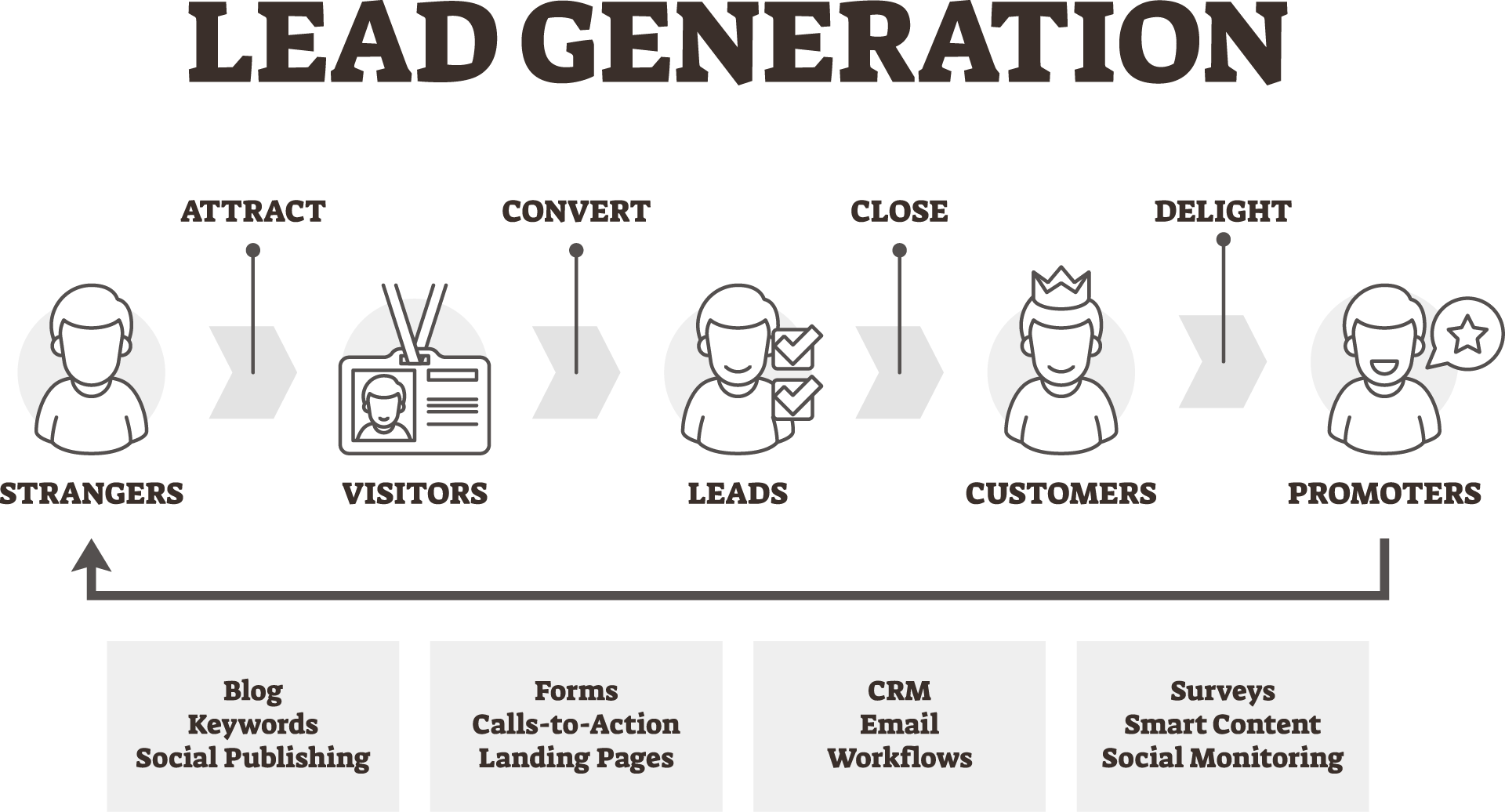
It’s all well and good until you consider that there are over 2 BILLION websites on the internet. “Only” 400 million or so of those are considered active, and the rest…well the rest sit in a pile, unindexed and forgotten.
Unfortunately, the whole concept of “if you build it, they will come” is largely a myth, unless your product or offering is so extremely specific that you have almost no competition.
So many website owners spend huge money on sites hosted on drag and drop site builders and get told by their IT people that all they need is a nice-looking web page with some fancy “dynamic widgets and analytics” and everything else will just work out.
That’s like telling a builder to build the shell of a house on top of a cardboard box, throw in some nice-looking windows and then leave the rest, because eventually, the plumbing and flooring and drywall and siding and ___ will magically happen and ‘just work out’.
We’d like to meet that guy and get some tips from him!

And yet sadly, that’s the approach of so very many businesses:
Basically all you have at this point is a fancy business card and no way to hand it out or even get noticed.
In order for your website to not get lost amid the noise, you have two options:
Consumers are spending a large part of their time every day on the Internet, and we have come to the point where the internet reaches into the physical world around you (think digital billboards for instance).
This is the next biggest issue. You know you should invest in SEO, but where should you go to acquire that service? Your business sense is telling you it’s a nearly invisible investment so you look for the cheapest alternative. One problem: You know who’s in the SEO space right now?
Everyone.
The market is so saturated with fly-by-night search engine optimization providers, they’re all forced to compete against each other to make a buck. They all basically read from the same outdated list of action items to work on to ‘help it rank’. We’re talking about your standards:

Great question!
SEO modeling has changed, even markedly in 2020 alone. That said, there are certain benchmarks that have stood the test of time, and in the current world of cognitive SEO the four most important are Relevance, User Experience, Authority, and Contextual Optimization.
Think about SEO like this: It’s Thanksgiving, and you really want a good recipe for pumpkin spiced latte. So you pop over to a search engine, and type “pumpkin spice latte” and hit enter.
You’re going to get an organic results page that looks similar to the following:
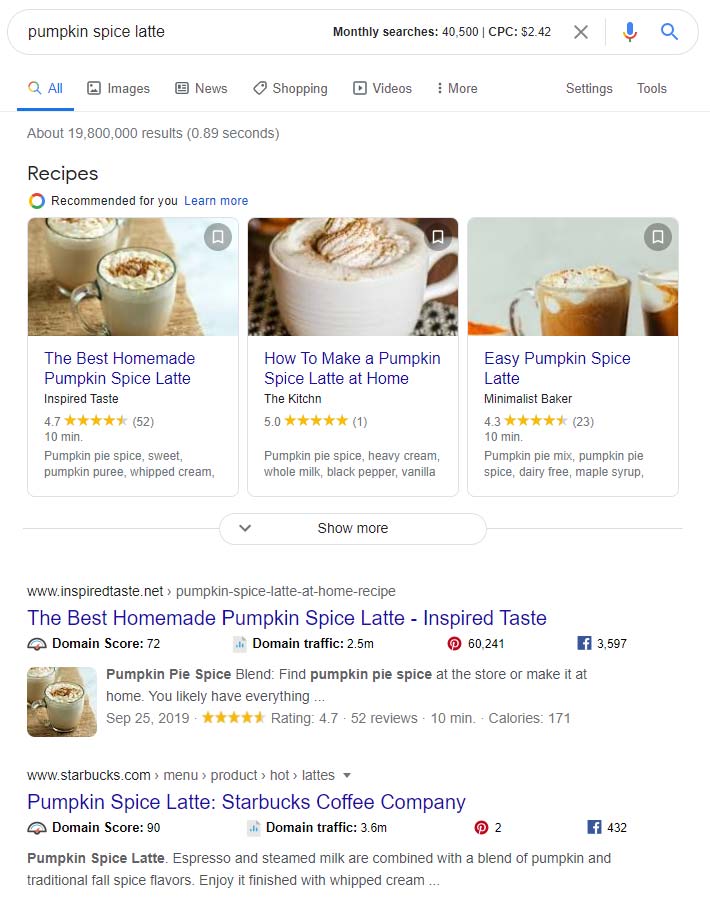
The takeaway here is that out of almost 20 million web pages and 40,500 searches a month for Pumpkin Spice Latte, Google has displayed the websites above using several levels of analysis and filtration:
This factor is influenced by On-site, Off-site, and Technical Search Engine Optimization.
This factor is influenced by Local Search Engine Optimization.

Think about it this way. If you run a company selling a service such as accounting, and your website is full of information about your accounting firm but also about your side business selling frozen yoghurt machines, you are running a contextually irrelevant website.

In the world of short attention spans, you have 3 seconds to grab and keep attention. But what is your audience looking for? Accounting? Yoghurt machines? Pilot hats? You can see where the message becomes garbled for lack of focus.
How is a search engine supposed to categorize your offering so it can serve it up to the most relevant audience?
It can’t.
This is why a site like this would be lucky to even be on page 50 of the search results. There are literally thousands of other sites for that audience that would be better suited to their search, so you are left in the dust.
This leads us to the next benchmark, User Experience.
Any solid SEO strategy will partially focus on your website’s User Experience. This is a simple concept, but easy to screw up. Here are some tips for a better user experience:
In a very abbreviated nutshell, it simply means:
How much of your website content is relevant to the type or desires of the audience you’d like to reach?
Taking that thought another step further:
How much of your content is helpful to your audience instead of promotional?
#Contentmarketing is educational, not promotional, says @MicheleLinn. https://t.co/XIdIR28ozd
— BlackValve Analytics (@BlackvalveA) November 26, 2020
This kind of content on your site makes a 100% difference to the weight which a search engine like Google will give to your content. The more helpful and RELEVANT it is to your audience, the better your rankings will be.
We leverage or create traffic flow to your website using unique marketing, and intelligently filter interest to bring you high quality leads, already primed and much more likely to purchase from you.
All you need to be concerned about is converting those quality leads to a sale, and
We don’t use guesswork to rank our clients’ sites. Ever.
Instead we adhere to a consistent, proven, and highly scientific methodology based purely on an intelligent interpretation of the data from your site to achieve ranking.
Your offers are only as good as the impressions you leave with people! Because of our strategic partnerships with some of the best media creators in the market, we are able to offer our clients an amazing array of media possibilities that would normally only be available to much larger clients!
Coupled with our in-house ads wizards, this packs an insanely powerful punch for your message.
Your website is a business card. You just need to hand it out. Table of Contents So you had a website built. Great. Now what?
Every small or multi-location company can grow their business and attract more customers using local SEO strategies. In this guide we explain what local search

We use cookies to personalize your experience on our website. By using our website you agree to our Terms of Service and Privacy Policy.